
This reporting was supported by the International Women’s Media Foundation’s Lauren Brown Fellowship.
ISLAMABAD – Militants in Pakistan’s volatile Waziristan region have escalated attacks on educational institutions just days before the end of 2025.
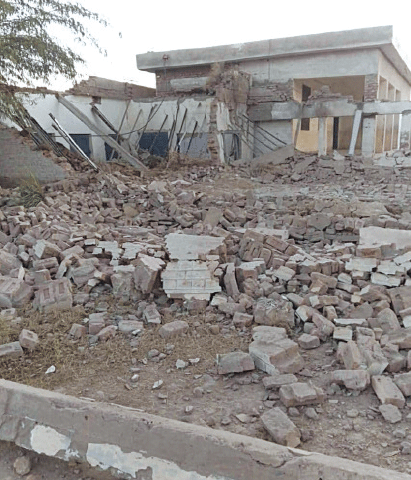
On Thursday, unidentified assailants detonated explosives at the Government Primary School in the Khushhali area of Ayaz Kot village in North Waziristan. According to reports, the attack obliterated much of the building and left more than 600 students without a classroom.
No group has claimed responsibility so far.
The attack follows a broader pattern of violence in the former tribal district, where armed groups have targeted schools amid a rise in terror attacks.
In December of last year, the United Nations special rapporteurs wrote a letter to the government of Pakistan, voicing their concerns over militant assaults on girls’ schools in the country.
In the letter, Farida Shaheed, special rapporteur on the right to education; Reem Alsalem, special rapporteur on violence against women and girls; and Laura Nyirinkindi, chair-rapporteur of the Working Group on discrimination against women and girls, called on the government of Pakistan to protect the fundamental right of women and girls to receive a safe and secure education.
“We are troubled by the persistent terrorist attacks targeting girls’ schools by groups opposing the education of women and girls. While all attacks on schools are reprehensible, those specifically aimed at girls’ institutions discourage women and girls from pursuing education, thereby reinforcing discrimination and societal inequalities,” the letter read.
Further, they requested information from the government regarding the investigations and actions being taken to safeguard girls’ schools in Waziristan.
Militants have bombed or burned girls’ schools in both North and South Waziristan, often citing opposition to female education.
Parents and rights advocates say the latest school bombing undermines efforts to expand schooling in a region where access to education, especially for girls, remains limited.
“This school was the only beacon of hope for our children,” one local elder was quoted as saying by Dawn, lamenting how the blast threatens young students’ futures.
Security challenges persist across Pakistan’s northwest, with Pakistani forces conducting counter-terror operations even as violence affects civilian life.
The rise in school attacks adds to mounting concerns about safety and the ability of the state to protect basic services in former conflict zones. Observers note that attacks on schools resonate widely in Pakistan, evoking memories of past high-profile assaults on educational institutions by extremists.

The writer is an Assistant Editor at Dissent Today, focusing on extremism and political violence.

