Sunday, February 8, 2026
HomeExtremism watchOverlooking Homegrown Hate, Pakistan Hesitates to Call Islamabad Blast Anti-Shia Violence

Overlooking Homegrown Hate, Pakistan Hesitates to Call Islamabad Blast Anti-Shia Violence

Published on

Fariha Ijaz
Fariha Ijaz
The writer is an Assistant Editor at Dissent Today, focusing on extremism and political violence.

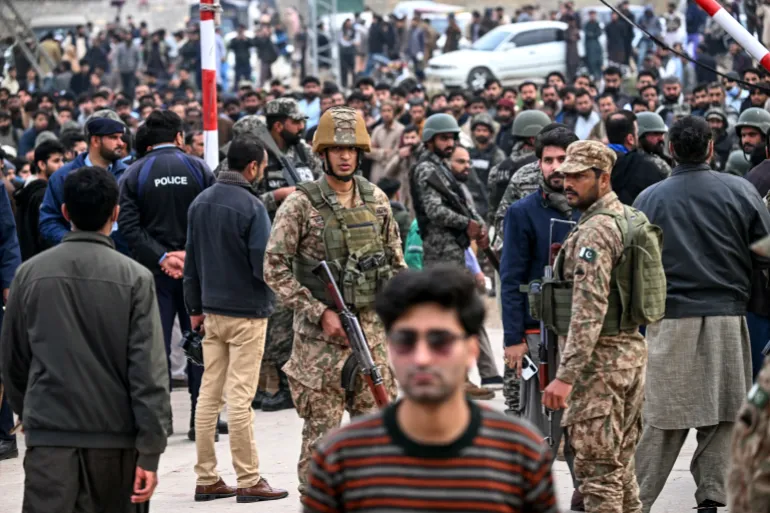
ISLAMABAD – Just hours before a suicide bomber struck the Khadija Tul Kubra Shia mosque in Islamabad during Friday prayers, killing at least 31 worshippers and injuring nearly 170 others, a sectarian rally organized by a banned extremist group was underway less than a kilometer away. As authorities push narratives about external involvement, the impunity enjoyed by anti-Shia extremist groups in Pakistan remains an underreported issue.

Footage and reports from the scene show leaders of Ahle Sunnat Wal Jamaat (ASWJ –widely understood as the rebranded form of the banned Sipah-e-Sahaba Pakistan (SSP) – delivering hard-line speeches in the afternoon just before the blast. The event included rhetoric targeting Shia beliefs and identity. While the rally itself did not turn violent, its timing and message have intensified scrutiny of the sectarian undercurrents that afflict Pakistan.

Who Are ASWJ/SSP?

ASWJ traces its roots directly to Sipah-e-Sahaba Pakistan, a Sunni extremist organization founded in the 1980s with an explicitly anti-Shia agenda. SSP was outlawed in 2002, but has continually resurfaced under new names, including ASWJ, allowing its activists and leaders to operate in public political and religious spaces.

Human rights reports and country analyses also document widespread incitement of hatred and violence against Shia Muslims by extremist clerics and groups in Pakistan, with rhetoric tolerated across many regions even when overt violence declines.

A history of anti-Shia violence

Shia Muslims – a minority in predominantly Sunni Pakistan – have been recurrent targets of sectarian violence over decades. Studies and historical records show thousands of Shias killed in militant attacks by groups that include violent offshoots of Sipah-e-Sahaba, Lashkar-e-Jhangvi, Tehreek-e-Taliban Pakistan (TTP), and Islamic State affiliates. These groups have on several occasions vowed to “rid Pakistan of Shias.”

Notable historical instances include the 1963 Therhi massacre in Sindh, where more than a hundred Shias were killed in a sectarian attack, and the 1988 Gilgit massacre, in which estimates place Shia fatalities in the hundreds amid targeted violence. Mass bombings in Quetta’s Shia-dominated neighborhoods and targeted killings also claimed hundreds of lives from 2010-2013.

More recently, a mass shooting ambush on a convoy of Shia travellers in Kurram District in late 2024 killed at least 54 people — one of the deadliest sectarian assaults in years.

These attacks are part of a long pattern of sectarian militancy in Pakistan, where extremist groups have periodically targeted Shias during worship, pilgrimage or travel.

Pakistan blames the “foreign hand”

In the aftermath of Friday’s Islamabad blast, Pakistani authorities have placed strong emphasis on foreign involvement in the attack.

Many high-level statements notably avoided explicitly identifying the victims as Shia or framing the attack as anti-Shia sectarian violence. Prime Minister Shehbaz Sharif described it as a “cowardly act of terrorism” and “heinous crime,” vowing justice and unity against extremism without referencing the Shia community or the long history of targeted attacks against them. President Asif Ali Zardari called it a “crime against humanity” targeting “innocent civilians,” similarly sidestepping sectarian specifics. Interior Minister Mohsin Naqvi and Defence Minister Khawaja Asif emphasized cross-border links and arrests of facilitators, focusing on general “terrorism” rather than domestic anti-Shia extremism.
Although Foreign Minister Ishaq Dar did refer to the site as a “Shia Imambargah” in his condemnation, the dominant official narrative across top leaders downplayed the clear sectarian motive – evident from the ISIS claim of responsibility, the mosque’s Shia identity, and Pakistan’s recurring pattern of such violence.

Interior Minister Mohsin Naqvi said investigators had identified suspects with links to militants in Afghanistan and alleged support from foreign actors, including India – claims that Indian officials have called “baseless and pointless.”

The Islamic State’s Pakistan affiliate has also claimed responsibility for the bombing, underscoring the role of transnational extremist networks in attacking Shia targets.

However, critics argue that focusing on external blame may obscure the deep-rooted history of sectarian hatred and organized anti-Shia activity inside Pakistan, including groups like ASWJ/SSP whose rhetoric and mobilisation have helped normalise social hostility toward religious minorities.

Civil society advocates warn that without confronting these internal dynamics – including public hate speech and the continued operation of sectarian networks – Pakistan’s recurring cycles of violence against Shias will persist alongside any foreign threats.

Latest articles

How Imaan-Hadi Conviction Marks the Death of Fair Trial in Pakistan

Last week, a trial court in Islamabad convicted human rights lawyers Imaan Zainab Mazari-Hazir and Hadi Ali Chattha under...

PTI’s Ambiguous Rhetoric on Taliban Is Dangerous for Pakistan’s Counter-Extremism Efforts

This reporting was supported by the International Women’s Media Foundation’s Lauren Brown Fellowship. Islamabad - Shafiullah Jan, special assistant to...

How My Daughter’s Trial Exposes Pakistan’s Assault on Human Rights

My daughter, a human rights lawyer, and her husband are currently on trial in Pakistan under cybercrime charges for...

600 Students Affected As Blast Destroys Government School in Waziristan

This reporting was supported by the International Women’s Media Foundation’s Lauren Brown Fellowship. ISLAMABAD - Militants in Pakistan’s volatile Waziristan...

Unseen Victims: How Pakistan’s Drone War is Haunting Tirah Valley

This reporting was supported by the International Women’s Media Foundation’s Lauren Brown Fellowship. Tirah Valley, Pakistan - After three months...

Why Balochistan’s Youth No Longer Trust Politics

I write this as the daughter of a Baloch nationalist leader and Pakistani parliamentarian who recently survived assassination attempts....

ISLAMABAD – Just hours before a suicide bomber struck the Khadija Tul Kubra Shia mosque in Islamabad during Friday prayers, killing at least 31 worshippers and injuring nearly 170 others, a sectarian rally organized by a banned extremist group was underway less than a kilometer away. As authorities push narratives about external involvement, the impunity enjoyed by anti-Shia extremist groups in Pakistan remains an underreported issue.

Footage and reports from the scene show leaders of Ahle Sunnat Wal Jamaat (ASWJ –widely understood as the rebranded form of the banned Sipah-e-Sahaba Pakistan (SSP) – delivering hard-line speeches in the afternoon just before the blast. The event included rhetoric targeting Shia beliefs and identity. While the rally itself did not turn violent, its timing and message have intensified scrutiny of the sectarian undercurrents that afflict Pakistan.

Who Are ASWJ/SSP?

ASWJ traces its roots directly to Sipah-e-Sahaba Pakistan, a Sunni extremist organization founded in the 1980s with an explicitly anti-Shia agenda. SSP was outlawed in 2002, but has continually resurfaced under new names, including ASWJ, allowing its activists and leaders to operate in public political and religious spaces.

Human rights reports and country analyses also document widespread incitement of hatred and violence against Shia Muslims by extremist clerics and groups in Pakistan, with rhetoric tolerated across many regions even when overt violence declines.

A history of anti-Shia violence

Shia Muslims – a minority in predominantly Sunni Pakistan – have been recurrent targets of sectarian violence over decades. Studies and historical records show thousands of Shias killed in militant attacks by groups that include violent offshoots of Sipah-e-Sahaba, Lashkar-e-Jhangvi, Tehreek-e-Taliban Pakistan (TTP), and Islamic State affiliates. These groups have on several occasions vowed to “rid Pakistan of Shias.”

Notable historical instances include the 1963 Therhi massacre in Sindh, where more than a hundred Shias were killed in a sectarian attack, and the 1988 Gilgit massacre, in which estimates place Shia fatalities in the hundreds amid targeted violence. Mass bombings in Quetta’s Shia-dominated neighborhoods and targeted killings also claimed hundreds of lives from 2010-2013.

More recently, a mass shooting ambush on a convoy of Shia travellers in Kurram District in late 2024 killed at least 54 people — one of the deadliest sectarian assaults in years.

These attacks are part of a long pattern of sectarian militancy in Pakistan, where extremist groups have periodically targeted Shias during worship, pilgrimage or travel.

Pakistan blames the “foreign hand”

In the aftermath of Friday’s Islamabad blast, Pakistani authorities have placed strong emphasis on foreign involvement in the attack.

Many high-level statements notably avoided explicitly identifying the victims as Shia or framing the attack as anti-Shia sectarian violence. Prime Minister Shehbaz Sharif described it as a “cowardly act of terrorism” and “heinous crime,” vowing justice and unity against extremism without referencing the Shia community or the long history of targeted attacks against them. President Asif Ali Zardari called it a “crime against humanity” targeting “innocent civilians,” similarly sidestepping sectarian specifics. Interior Minister Mohsin Naqvi and Defence Minister Khawaja Asif emphasized cross-border links and arrests of facilitators, focusing on general “terrorism” rather than domestic anti-Shia extremism.
Although Foreign Minister Ishaq Dar did refer to the site as a “Shia Imambargah” in his condemnation, the dominant official narrative across top leaders downplayed the clear sectarian motive – evident from the ISIS claim of responsibility, the mosque’s Shia identity, and Pakistan’s recurring pattern of such violence.

Interior Minister Mohsin Naqvi said investigators had identified suspects with links to militants in Afghanistan and alleged support from foreign actors, including India – claims that Indian officials have called “baseless and pointless.”

The Islamic State’s Pakistan affiliate has also claimed responsibility for the bombing, underscoring the role of transnational extremist networks in attacking Shia targets.

However, critics argue that focusing on external blame may obscure the deep-rooted history of sectarian hatred and organized anti-Shia activity inside Pakistan, including groups like ASWJ/SSP whose rhetoric and mobilisation have helped normalise social hostility toward religious minorities.

Civil society advocates warn that without confronting these internal dynamics – including public hate speech and the continued operation of sectarian networks – Pakistan’s recurring cycles of violence against Shias will persist alongside any foreign threats.

LEAVE A REPLY

Please enter your comment!
Please enter your name here

Also Read

PTI’s Ambiguous Rhetoric on Taliban Is Dangerous for Pakistan’s...

This reporting was supported by the International Women’s Media...

In Islamabad, State’s Apathy on Full Display as Baloch...

Human rights lawyer Imaan Mazari writes about Baloch families —...

‘Unchecked Impunity’: Fact-Finding Mission Reveals Root Causes of Instability...

A major Pakistani rights watchdog, the Human Rights Commission...

Once Above the Law, Now Under Fire: Malik Riaz’s...

ISLAMABAD: Pakistani real estate tycoon Malik Riaz warned Tuesday...
