Sunday, February 8, 2026
HomeNewsRTI Act: PTI Lawmaker Wants Citizens' Access To Parliament's Records Restricted

RTI Act: PTI Lawmaker Wants Citizens’ Access To Parliament’s Records Restricted

Published on

Pakistan Tehreek-e-Insaf (PTI) Senator Wajid Iqbal and Balochistan Awami Party (BAP) Senator Manzoor Ahmed have proposed changes to the information act bill, suggesting restricting the public’s right to information from the National Assembly and Senate, including their secretariats, committees, and members. The members of civil society have criticised the move, calling it “regressive”.

The Rights of Access to Information Act 2017 provides an overall legal framework for the enforcement of citizens’ right to information. It ensures that everyone shall have the fundamental right of access to information and promote the purpose of making the Government more accountable to its people, and of improving participation by the people in public affairs, and promoting good governance.

The proposed amendment to the act suggests that the public would not be able to seek information from the National Assembly and Senate, including their secretariats, committees, and members. The bill is scheduled to be taken up next week in the Cabinet.

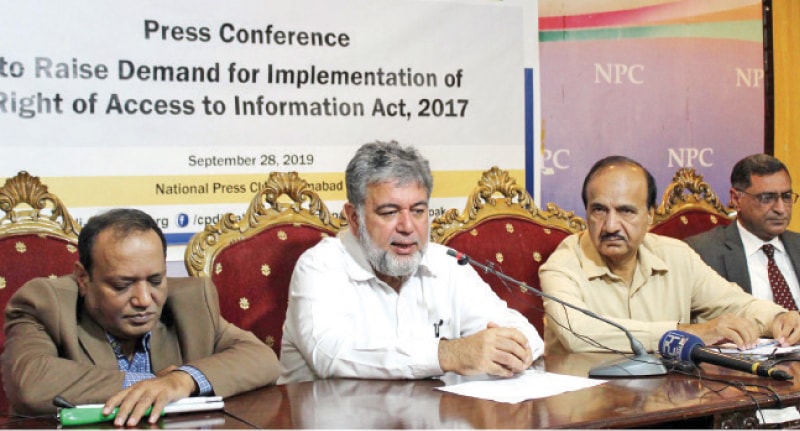
According to Dawn, the Centre for Peace and Development Initiatives (CPDI) has urged the lawmakers to reject the proposed amendment, deeming it “regressive”.

In letters written to lawmakers, the CPDI said the efforts to weaken laws should be rejected and instead the citizens’ access to the information must be strengthened.

PPP leader Farhatullah Babar also said expressed concerns over the proposed amendment, saying “By excluding itself from RTI Act 2017, refusing transparency while demanding transparency from all other state institutions the parliament is only ridiculing itself. Pity. Parliament bemoaning that it is not respected sounds hollow.”


Former Punjab Information Commissioner Mukhtar Ahmad Ali questioned the PTI senator for proposing the amendment, saying that the proposed changes to the act will make “parliament less transparent”.

Latest articles

Overlooking Homegrown Hate, Pakistan Hesitates to Call Islamabad Blast Anti-Shia Violence

ISLAMABAD - Just hours before a suicide bomber struck the Khadija Tul Kubra Shia mosque in Islamabad during Friday...

How Imaan-Hadi Conviction Marks the Death of Fair Trial in Pakistan

Last week, a trial court in Islamabad convicted human rights lawyers Imaan Zainab Mazari-Hazir and Hadi Ali Chattha under...

PTI’s Ambiguous Rhetoric on Taliban Is Dangerous for Pakistan’s Counter-Extremism Efforts

This reporting was supported by the International Women’s Media Foundation’s Lauren Brown Fellowship. Islamabad - Shafiullah Jan, special assistant to...

How My Daughter’s Trial Exposes Pakistan’s Assault on Human Rights

My daughter, a human rights lawyer, and her husband are currently on trial in Pakistan under cybercrime charges for...

600 Students Affected As Blast Destroys Government School in Waziristan

This reporting was supported by the International Women’s Media Foundation’s Lauren Brown Fellowship. ISLAMABAD - Militants in Pakistan’s volatile Waziristan...

Unseen Victims: How Pakistan’s Drone War is Haunting Tirah Valley

This reporting was supported by the International Women’s Media Foundation’s Lauren Brown Fellowship. Tirah Valley, Pakistan - After three months...

Pakistan Tehreek-e-Insaf (PTI) Senator Wajid Iqbal and Balochistan Awami Party (BAP) Senator Manzoor Ahmed have proposed changes to the information act bill, suggesting restricting the public’s right to information from the National Assembly and Senate, including their secretariats, committees, and members. The members of civil society have criticised the move, calling it “regressive”.

The Rights of Access to Information Act 2017 provides an overall legal framework for the enforcement of citizens’ right to information. It ensures that everyone shall have the fundamental right of access to information and promote the purpose of making the Government more accountable to its people, and of improving participation by the people in public affairs, and promoting good governance.

The proposed amendment to the act suggests that the public would not be able to seek information from the National Assembly and Senate, including their secretariats, committees, and members. The bill is scheduled to be taken up next week in the Cabinet.

According to Dawn, the Centre for Peace and Development Initiatives (CPDI) has urged the lawmakers to reject the proposed amendment, deeming it “regressive”.

In letters written to lawmakers, the CPDI said the efforts to weaken laws should be rejected and instead the citizens’ access to the information must be strengthened.

PPP leader Farhatullah Babar also said expressed concerns over the proposed amendment, saying “By excluding itself from RTI Act 2017, refusing transparency while demanding transparency from all other state institutions the parliament is only ridiculing itself. Pity. Parliament bemoaning that it is not respected sounds hollow.”


Former Punjab Information Commissioner Mukhtar Ahmad Ali questioned the PTI senator for proposing the amendment, saying that the proposed changes to the act will make “parliament less transparent”.

LEAVE A REPLY

Please enter your comment!
Please enter your name here

Also Read

All Parties Conference Organized By ANP Puts Faith In...

An All Parties Conference led by Awami National Party...