
I write this as the daughter of a Baloch nationalist leader and Pakistani parliamentarian who recently survived assassination attempts. What we are going through is not simply personal, it is deeply political, and it deserves attention beyond our borders.
Balochistan is Pakistan’s largest province by land, bordering Afghanistan and Iran. It is rich in minerals and resources, but it has long suffered from poverty, underdevelopment, and weak political representation.
Despite its strategic importance and its contributions, the voices of ordinary Baloch citizens are rarely heard in national debates.
Over the last year, Balochistan has been racked by escalating violence and systematic suppression of dissent. The arrests of leaders human rights activists like Dr. Mahrang Baloch and others connected with their group, Baloch Yakjehti Committee, reflect a government approach that favors coercion over conversation.
Several recent assassination attempts make this clear. In March of this year, my father, Sardar Akhtar Mengal, narrowly escaped a suicide bombing near a rally he was leading from Wadh to the capital, Quetta, in a mountainous district called Mastung.
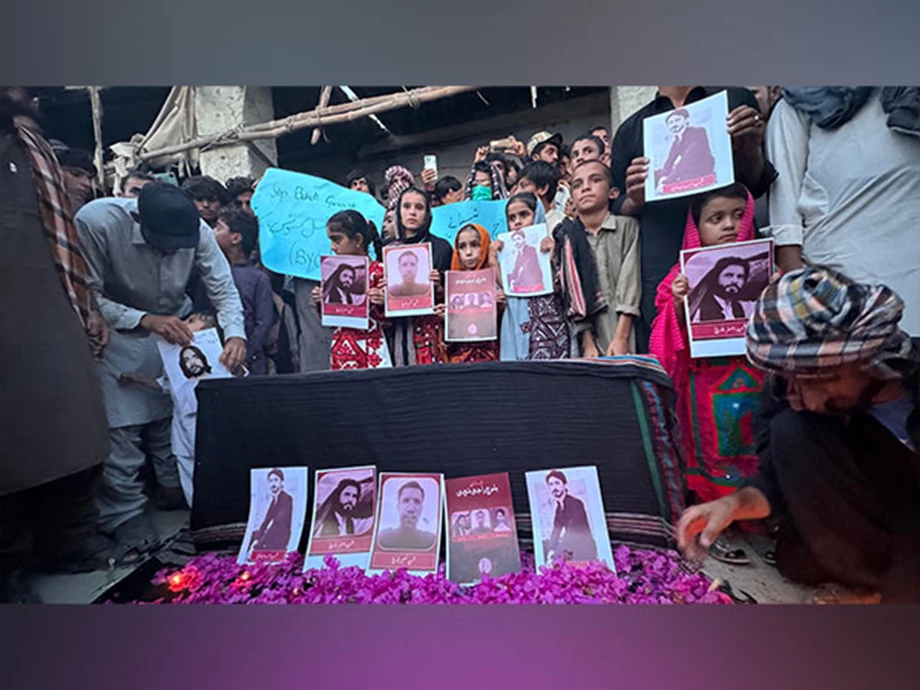
On September 2, in Quetta, a bomb exploded in the parking area after a memorial gathering for my grandfather, Sardar Ataullah Mengal, killing at least eleven people and injuring many more just as the event was ending. It was obvious the gathering itself was the target.
These attacks are meant to send a warning that political expression is allowed only on the state’s terms. Weeks have passed without serious inquiry or accountability. When Balochistan has no electoral impact, its concerns vanish from the spotlight. Its political space has shrunk through arrests, harassment, and threats. Once this void forms, restoring trust becomes extremely difficult.
Despite large budgets allocated for “security,” protection of lives does not follow. I remember watching news of disasters like the Jaffarabad Express tragedy and the casualties at my grandfather’s death anniversary. The urgency, which should come with such loss of life, was missing.
National politics treats Balochistan only as a bargaining chip — when votes are needed to pass controversial legislation or to form coalitions. But increasingly, even that limited influence is slipping, as handpicked representatives dominate assemblies and legislation passes without meaningful negotiation.
On the international stage, Balochistan is often framed as a place of resource opportunity — where mining, oil, gas, and ports matter for foreign investors. But the disparity between those economic narratives and the lived reality is stark. Communities remain underdeveloped, suffer human rights abuses, and see little benefit from the projects supposed to lift them.
There is also a trend of simplifying Baloch grievances into accusations of “foreign interference,” allowing governments to avoid real accountability. Meanwhile, people inside Pakistan who oppose or criticize repressive policies are punished or ignored. Opposition parties speak loudly about Baloch issues only when they are out of power. Once in power, they often fall silent, offering phrases like “we were constrained, what can we do?” — which only deepen the sense that suffering is rhetorical, not real.
To break this cycle, meaningful change is essential.
- End arbitrary arrests. Let political activists and human rights defenders work without fear.
- Create a credible, independent truth and reconciliation commission to address enforced disappearances and abuse.
- Ensure that local communities have a genuine say in decisions about resource extraction and development, so that they see benefits themselves.
- Shift from militarized security toward civilian governance, especially in cities where political expression must be protected.
- Invest in education, entrepreneurship, and civic engagement so young people see that politics can be a path to change — not a dead end.
This moment is dangerous but not irreversible. If the state does not act, the gulf of disillusionment will grow. If voices are silenced, unrest will grow. Dialogue, inclusion, and justice remain our only way forward.
Amid violence and unrest, Balochistan’s youth are waiting for reasons to believe in politics again. The responsibility now rests with those in power to offer those reasons before trust is lost permanently. It may feel like time has run out, but it is not yet over.

The writer is the co-founder of the NGO BYAC, which focuses on advocacy and community initiatives in Balochistan, Pakistan.

