Sunday, February 8, 2026
HomeOpinionHow Imaan-Hadi Conviction Marks the Death of Fair Trial in Pakistan

How Imaan-Hadi Conviction Marks the Death of Fair Trial in Pakistan

Published on

Farieha Aziz
Farieha Aziz
The writer is a co-founder of Bolo Bhi, an advocacy forum for digital rights and host of the Digi Pod on Dawn News English

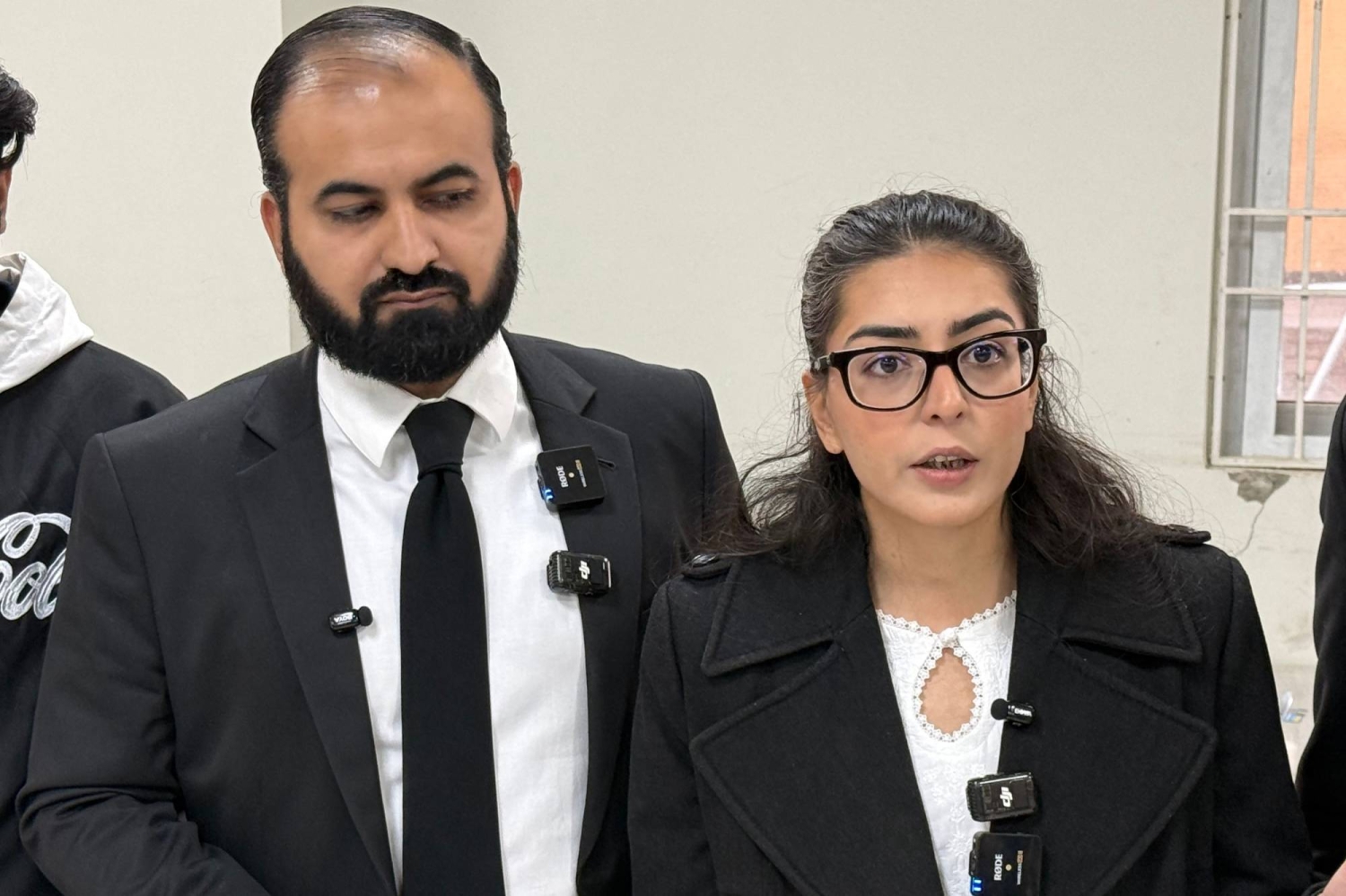
Last week, a trial court in Islamabad convicted human rights lawyers Imaan Zainab Mazari-Hazir and Hadi Ali Chattha under Pakistan’s highly controversial cybercrime law, known as the Prevention of Electronic Crimes Act (PECA).

The convictions against the husband-wife duo stem from tweets about enforced disappearances and other human rights concerns posted by Imaan and reposted by Hadi.

For these X posts, both have been convicted under various sections of the cybercrime law. However, the order does not clarify whether the sentences are to be served consecutively, amounting to a total of 17 years, or concurrently, which would cap the jail term at 10 years — the maximum sentence imposed under any single section.

Ten years ago, in 2016, when the Prevention of Electronic Crimes Act was passed under the Pakistan Muslim League – N (PML-N) government, it was widely criticized as a tool to suppress dissent. In the years since, vague call-up notices and First Information Reports (FIRs) against political workers, journalists, and dissidents have become routine. The accusations almost always involve posting “anti-state” content.

Originally enacted under the PML-N government, PECA was later turned against PML-N workers and leaders after their term ended in 2018. The Pakistan Tehreek-e-Insaf (PTI) attempted to further strengthen the law through controversial amendments and ordinances during its tenure from 2018 to 2022, though these moves did not survive judicial scrutiny.


“While the common complaint about Pakistan’s criminal justice system is endless delays, Imaan and Hadi’s trial was unusually swift — though far from fair.”


A constant criticism of PECA is that the process itself serves as punishment: individuals are charged and then subjected to the grueling criminal trial process, which becomes punitive in its own right. Arrests, bail hearings, repeated court appearances, the stigma of being labeled “anti-state,” and the constant threat of a lingering case – often without trial – have been the typical pattern under PECA. This ordeal itself seemed to be the goal, rather than securing convictions. That changed with Imaan and Hadi’s case, which proceeded with unusual swiftness.

Among other provisions, they were sentenced under the latest amendment to PECA, called Section 26-A, which was introduced after a rushed and controversial process just last year by the current ruling coalition. The amendment was pushed through the Parliament without meaningful debate and was deployed almost immediately against journalists less than two months after its passage. Imaan and Hadi had defended some of these journalists as counsel. Ironically, theirs is the first conviction under PECA’s latest amendment. Their only “crime” was refusing to acquiesce. This refusal is precisely what they have been punished for.

While the common complaint about Pakistan’s criminal justice system is endless delays, Imaan and Hadi’s trial was unusually swift — though far from fair. The cybercrime case against them was registered last August, and the trial concluded within five months. This trial can only be described as a mistrial, since they were sentenced in absentia. While on their way to appear before the trial court (after receiving protection from the High Court), they were violently arrested in connection with another case. A fresh, previously unknown FIR – dating back to February – was suddenly invoked against the couple, of which neither they nor anyone else had prior knowledge. They were stopped in the middle of the road, violently arrested, and secretly produced before the Anti-Terrorism Court without informing their family or legal counsel.

They were arrested on Jan. 23, and sent to Adiala Jail. The High Court had given them until Jan. 24 to join the trial court proceedings and complete the cross examination of prosecution witnesses. Had they not been arrested, they would have done so. But since they were intercepted on their way to court, then put in jail, they were made to join court proceedings in the PECA trial via video link from prison. They were told to complete their cross-examination remotely rather than in person — of course without access to any case files or ability to confront witnesses with material. Just because someone is placed under arrest in one case does not mean they forgo the right to appear in court to defend themselves in another case registered against them. Both protested how they were being dealt with, boycotting the proceedings. Hours later, they were convicted.

Laws like PECA, which excessively criminalize speech, are merely instruments of control. Compounded by a regressive and overbroad statute is a criminal justice system that many human rights advocates call a “criminal injustice” system, wielded by the state to target dissidents like Imaan and Hadi.

As seen in their case, complaints often originate from within the investigating agency itself: the case was built by an officer of the National Cyber Crime Investigation Agency (NCCIA). In most such cases, a technical assistant from the agency serves as the complainant or informant, monitoring and flagging posts. What is particularly absurd about their case is that the “incriminating” posts reflect positions long and publicly held by a wide range of human rights activists – including many now in government when they were in opposition. These concern the rights of political prisoners wrongly incarcerated by the state, the practice of enforced disappearances, the plight of affected families, and broader state policy on militancy.

When Imaan and Hadi cross-examined NCCIA officers, it became evident how quickly the case unraveled on its merits. But that was precisely what was not allowed. Not once but twice, their right to cross-examination was denied. They had to approach the High Court and Supreme Court to have it restored.

When they did get that right, they were hit with fresh cases and ultimately jailed in one and sentenced in another. The judgment itself makes no mention of the cross-examination that occurred, as though it never happened.

Two human rights lawyers who have defended others against the state’s excesses and advocated for the wrongfully incarcerated now face the same treatment themselves. It is now up to others to advocate for their rights, because if this can happen to them, it can happen to anyone.

Latest articles

Overlooking Homegrown Hate, Pakistan Hesitates to Call Islamabad Blast Anti-Shia Violence

ISLAMABAD - Just hours before a suicide bomber struck the Khadija Tul Kubra Shia mosque in Islamabad during Friday...

PTI’s Ambiguous Rhetoric on Taliban Is Dangerous for Pakistan’s Counter-Extremism Efforts

This reporting was supported by the International Women’s Media Foundation’s Lauren Brown Fellowship. Islamabad - Shafiullah Jan, special assistant to...

How My Daughter’s Trial Exposes Pakistan’s Assault on Human Rights

My daughter, a human rights lawyer, and her husband are currently on trial in Pakistan under cybercrime charges for...

600 Students Affected As Blast Destroys Government School in Waziristan

This reporting was supported by the International Women’s Media Foundation’s Lauren Brown Fellowship. ISLAMABAD - Militants in Pakistan’s volatile Waziristan...

Unseen Victims: How Pakistan’s Drone War is Haunting Tirah Valley

This reporting was supported by the International Women’s Media Foundation’s Lauren Brown Fellowship. Tirah Valley, Pakistan - After three months...

Why Balochistan’s Youth No Longer Trust Politics

I write this as the daughter of a Baloch nationalist leader and Pakistani parliamentarian who recently survived assassination attempts....

Last week, a trial court in Islamabad convicted human rights lawyers Imaan Zainab Mazari-Hazir and Hadi Ali Chattha under Pakistan’s highly controversial cybercrime law, known as the Prevention of Electronic Crimes Act (PECA).

The convictions against the husband-wife duo stem from tweets about enforced disappearances and other human rights concerns posted by Imaan and reposted by Hadi.

For these X posts, both have been convicted under various sections of the cybercrime law. However, the order does not clarify whether the sentences are to be served consecutively, amounting to a total of 17 years, or concurrently, which would cap the jail term at 10 years — the maximum sentence imposed under any single section.

Ten years ago, in 2016, when the Prevention of Electronic Crimes Act was passed under the Pakistan Muslim League – N (PML-N) government, it was widely criticized as a tool to suppress dissent. In the years since, vague call-up notices and First Information Reports (FIRs) against political workers, journalists, and dissidents have become routine. The accusations almost always involve posting “anti-state” content.

Originally enacted under the PML-N government, PECA was later turned against PML-N workers and leaders after their term ended in 2018. The Pakistan Tehreek-e-Insaf (PTI) attempted to further strengthen the law through controversial amendments and ordinances during its tenure from 2018 to 2022, though these moves did not survive judicial scrutiny.


“While the common complaint about Pakistan’s criminal justice system is endless delays, Imaan and Hadi’s trial was unusually swift — though far from fair.”


A constant criticism of PECA is that the process itself serves as punishment: individuals are charged and then subjected to the grueling criminal trial process, which becomes punitive in its own right. Arrests, bail hearings, repeated court appearances, the stigma of being labeled “anti-state,” and the constant threat of a lingering case – often without trial – have been the typical pattern under PECA. This ordeal itself seemed to be the goal, rather than securing convictions. That changed with Imaan and Hadi’s case, which proceeded with unusual swiftness.

Among other provisions, they were sentenced under the latest amendment to PECA, called Section 26-A, which was introduced after a rushed and controversial process just last year by the current ruling coalition. The amendment was pushed through the Parliament without meaningful debate and was deployed almost immediately against journalists less than two months after its passage. Imaan and Hadi had defended some of these journalists as counsel. Ironically, theirs is the first conviction under PECA’s latest amendment. Their only “crime” was refusing to acquiesce. This refusal is precisely what they have been punished for.

While the common complaint about Pakistan’s criminal justice system is endless delays, Imaan and Hadi’s trial was unusually swift — though far from fair. The cybercrime case against them was registered last August, and the trial concluded within five months. This trial can only be described as a mistrial, since they were sentenced in absentia. While on their way to appear before the trial court (after receiving protection from the High Court), they were violently arrested in connection with another case. A fresh, previously unknown FIR – dating back to February – was suddenly invoked against the couple, of which neither they nor anyone else had prior knowledge. They were stopped in the middle of the road, violently arrested, and secretly produced before the Anti-Terrorism Court without informing their family or legal counsel.

They were arrested on Jan. 23, and sent to Adiala Jail. The High Court had given them until Jan. 24 to join the trial court proceedings and complete the cross examination of prosecution witnesses. Had they not been arrested, they would have done so. But since they were intercepted on their way to court, then put in jail, they were made to join court proceedings in the PECA trial via video link from prison. They were told to complete their cross-examination remotely rather than in person — of course without access to any case files or ability to confront witnesses with material. Just because someone is placed under arrest in one case does not mean they forgo the right to appear in court to defend themselves in another case registered against them. Both protested how they were being dealt with, boycotting the proceedings. Hours later, they were convicted.

Laws like PECA, which excessively criminalize speech, are merely instruments of control. Compounded by a regressive and overbroad statute is a criminal justice system that many human rights advocates call a “criminal injustice” system, wielded by the state to target dissidents like Imaan and Hadi.

As seen in their case, complaints often originate from within the investigating agency itself: the case was built by an officer of the National Cyber Crime Investigation Agency (NCCIA). In most such cases, a technical assistant from the agency serves as the complainant or informant, monitoring and flagging posts. What is particularly absurd about their case is that the “incriminating” posts reflect positions long and publicly held by a wide range of human rights activists – including many now in government when they were in opposition. These concern the rights of political prisoners wrongly incarcerated by the state, the practice of enforced disappearances, the plight of affected families, and broader state policy on militancy.

When Imaan and Hadi cross-examined NCCIA officers, it became evident how quickly the case unraveled on its merits. But that was precisely what was not allowed. Not once but twice, their right to cross-examination was denied. They had to approach the High Court and Supreme Court to have it restored.

When they did get that right, they were hit with fresh cases and ultimately jailed in one and sentenced in another. The judgment itself makes no mention of the cross-examination that occurred, as though it never happened.

Two human rights lawyers who have defended others against the state’s excesses and advocated for the wrongfully incarcerated now face the same treatment themselves. It is now up to others to advocate for their rights, because if this can happen to them, it can happen to anyone.

LEAVE A REPLY

Please enter your comment!
Please enter your name here

Also Read

How My Daughter’s Trial Exposes Pakistan’s Assault on Human...

My daughter, a human rights lawyer, and her husband...

How The PPP Played Both Sides While Passing The...

Journalists across Pakistan are out on the streets protesting...

PPP Leader Says PECA Amendments Will Undermine Freedom of...

ISLAMABAD: The Prevention of Electronic Crimes (Amendment) bill passed...

Imaan Mazari, Ali Wazir Handed Over To Counter Terrorism...

An anti-terrorism court in Islamabad has remanded human rights...
